Key Takeaways at a Glance
- Kashayam decoctions utilize simple spice-cabinet ingredients with clinically verified antimicrobial properties.
- Whole ginger contains gingerol compounds that activate digestive fire and reduce systemic inflammation.
- Sip warm herbal water (Jeera-Dhania) throughout the afternoon to maintain cellular hydration.
- Pair spices with natural healthy fats like A2 cow ghee to maximize phytochemical absorption.
Long before colorful multivitamins filled medicine cabinets, the Indian kitchen counter served as the primary sanctuary for family health. Spices were never measured solely for piquancy; they were measured for seasonal balance, digestive equilibrium, and cellular defense.
Rediscovering the Kitchen as Your First Pharmacy
Modern clinical medicine increasingly identifies gut health as the cornerstone of human immunity. Fascinatingly, ancient Ayurvedic texts described this thousands of years ago as Agni — the digestive fire that transforms nourishment into vital life energy (Ojas).
4 Everyday Herbal Infusions to Try
1. Golden Mountain Pepper & Turmeric Brew
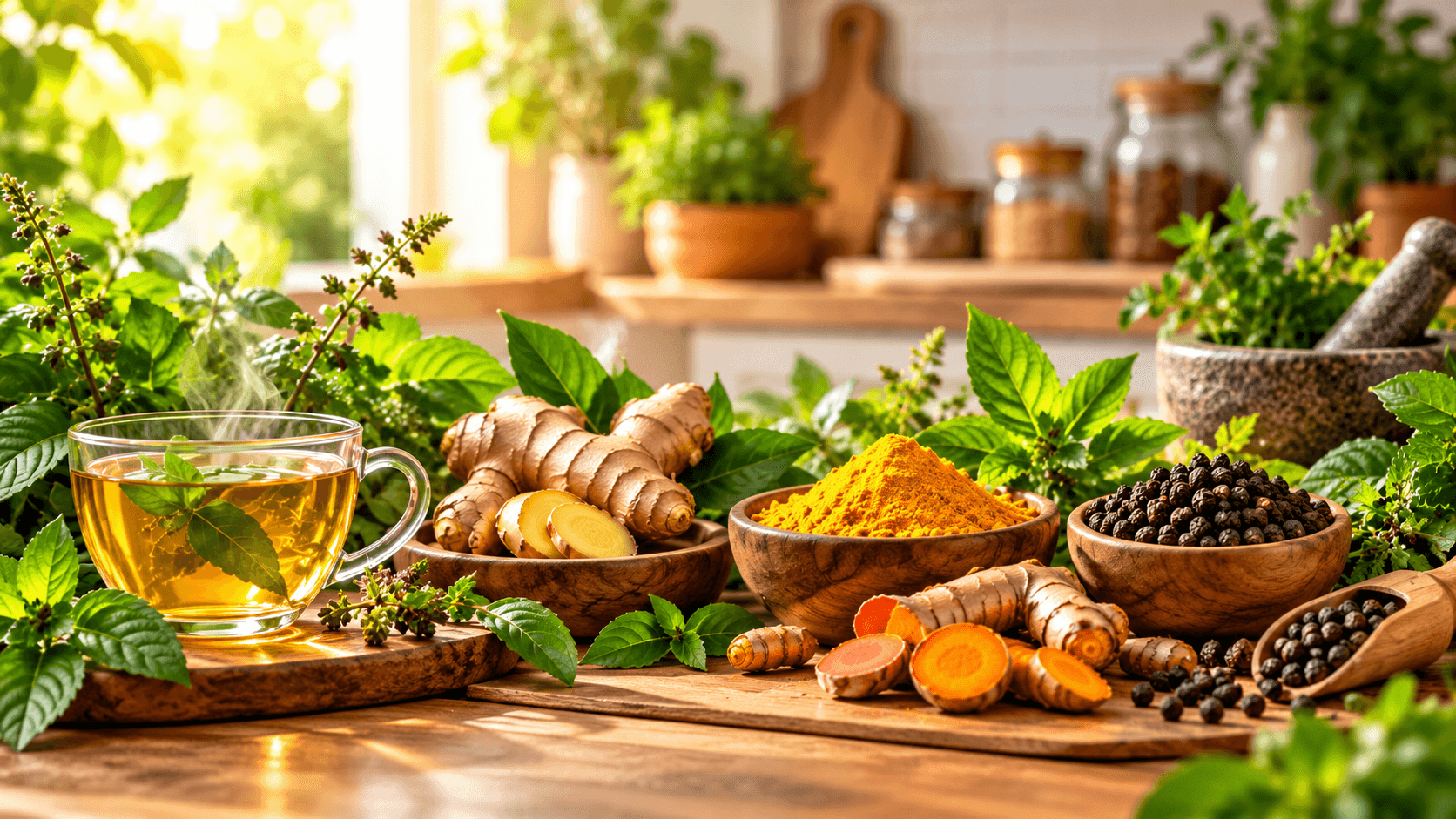
Gently crush 4 Kolli black peppercorns, 1/2 tsp pure turmeric, and a thumbnail slice of fresh ginger into 300ml of boiling water. Simmer until reduced by a third. Stir in a teaspoon of raw forest honey once cooled slightly.
2. Digestive Jeera & Fennel Cooler
Lightly bruise cumin and fennel seeds, steep in warm water for 10 minutes, and sip after heavy lunches to eradicate afternoon bloating and mental lethargy.
Never boil honey directly over fire! Ayurvedic guidelines and food science agree: heating honey past 40°C alters its delicate enzyme structure and causes caramelization that generates digestive toxins.